Tag Archives: Yeast Infection Treatment

Fecal Microbial Transplant: What You Need To Know

I have been following the science of fecal microbial transplants for years.

I just saw on Wikipedia that it was first performed in 1958 in the States. Still, more recently since the 1980s, it’s been performed and probably likely pioneered by the Center for Digestive Diseases in Sydney, Australia.

After a medical conference in Sydney, I had some discussions with some of the doctors that work at the CDC. One of the doctors said that when they first started doing the pilot studies with a group of about 20 patients, after 12 months, all patients had exactly the same problem that they had prior to the transplant. So it’s not a cure-all. FMT was originally used particularly for Clostridium difficile, quite a nasty gut infection you can get, which can lead to some serious bowel problems. In fact, it’s now sort of become the standard treatment for C. diff in America.

My personal opinion on FMT is, in most cases, it’s not going to have much effect on the patient.
Doctor Thomas Borody from the CDC, for example, in 1988, had a successful attempt at working with a patient with ulcerative colitis (UC) with FMT. The patient went into remission for a considerable period and then relapsed. I worked with over 100 cases of UC in the last several years, and they had almost a complete remission for an extended period using no FMT whatsoever.

My clients were able to go into remission through stool testing, eliminating the main pathogens, rebuilding the gut with probiotics, and following an anti-inflammatory diet.

Fecal microbial transplant, in my opinion, is clutching at straws. It’s a last resort kind of thing that many people jump into, but now it’s sort of seen as a first resort. I think it should be reserved for rare and unusual cases where other avenues have been exhausted. In my personal opinion, it’s not required in 99% of cases.

Now, I’m probably going to get some comments back along the lines of, “I had successful FMT or I would’ve been dead years ago.” I’m sure there’ll be people out there like that, but you’ll likely be only 1% of patients with serious gut problems.

Further readings:

For 99% of people, it’s possible to get great results through regular stool tests, getting on top of leaky gut, addressing SIBO, and managing Candida.

If you fix things up earlier, they don’t become serious problems down the track, requiring things like FMT. Now, as I mentioned, there will be rare, genetically-linked cases that may benefit from FMT.

Several years ago, I had a young client from the UK who had a very dysfunctional GI system. I tried many things with her and couldn’t get the result I was looking for. The parents had plenty of money, so they flew the girl to Sydney. The girl had FMT, and for three months, it was all hunky-dory. This girl thought she was cured, but then, bang, straight back to where she was. 30 grand later, she’s back in the same hole she was in the beginning.

Ultimately, the solution for this young lady was probiotics. Once we found the correct probiotics for her, literally within a month, she was back at university again. It’s as simple as that, okay? This girl spent a lot of money going to all different clinics, tried all of the different types of antibiotics, many different things, but in the end, it was just probiotics that fixed her up.

Sources:

Serotonin And The Gut: What You Need To Know

Serotonin is a neurotransmitter that has an impact on both the brain and the gut. It comes from the amino acid tryptophan and can be released as a result of vagal stimulation.

Most people have heard of Prozac, a selective serotonin reuptake inhibitor (SSRI) used to treat depression. SSRIs are given to people to help flood their brains with serotonin. That’s one of the reasons most people think of mood problems when they hear the word serotonin.

SSRIs prolong the life of serotonin in the body by preventing it from breaking down in synaptic junctions.

However, serotonin does more than regulate the mood.

Serotonin also impacts the libido. It affects the heart by increasing vasodilatation and vasoconstriction via certain biochemical pathways.

Serotonin impacts bone, uterine contractions, and the digestive system.

Further readings:

The GI system contains 5-HT receptors. These receptors uptake serotonin. We all need to have a good supply of serotonin to maintain optimal gut function.

Serotonin has a particularly beneficial impact on the migrating motor complex (MMC). The MMC is responsible for moving food through the digestive system, which helps regulate appetite and digestive control. Having a sufficient supply of serotonin will help maintain a healthy weight and reduce cravings.

The MMC also has an impact on bowel function. It ensures that stool is not too firm or too loose. This is why people with terrible problems with constipation or diarrhea often also have a serotonin imbalance.

Serotonin also helps ensure that the amount of stomach acid you have isn’t too little or too much. Serotonin is even helpful when it comes to nausea and vomiting because it helps regulate the relevant pathways.

And, don’t forget, serotonin is important for the prevention of leaky gut.

Clearly, serotonin is a chemical that plays a pivotal role in human health.

Sources:

D-Limonene: An Introduction

D-limonene is a constituent found in citrus fruit. I think they call it monoterpene. It’s a particular type of chemical, a hydrocarbon, that’s found in the white pith, or in the peel, of oranges, in particular. D-limonene is a type of monoterpene.

My question is, why focus on eating a constituent of citrus when you could have the whole fruit?
When you take a constituent, especially a monoterpene, from a plant, and they make it in a large amount and put it in a pill, it’s going to create bloating and gas.

Many people get reflux from taking concentrated D-limonene. I’ve had reports of diarrhea, and constipation, and heartburn from taking stuff that’s supposed to make you feel better.
Of course, this isn’t just true for D-limonene. Many pharmaceutical medications worsen the problems they are supposed to cure.

Natural medicine is getting to the point where it’s becoming almost like pharmaceutical medicine. Some companies are taking chemicals that are present in the diet in tiny amounts and blowing them up into large amounts. At the same time, they’re disregarding all of the other complimentary miscellaneous substances that are provided by nature with that plant.

Further readings:

When I make a supplement I try, and very carefully, not to do that. I try and make sure that I look at an active ingredient and then make sure that all of the other compounds are included. So having a single active molecule, on its own, can be problematic for people.

Can d-Limonene cause gas and diarrhea? Yes, it can. You need to be very careful with it. In my opinion, have a small amount of citrus, like lemon, lime, or grapefruit instead.

Grapefruit is incredibly healthy, but some medications don’t interact well with this fruit. Grapefruit contains a flavonoid called naringenin, which can impact the processing of drugs by the liver.

But for 99% of people, it’s going to be fine to have a piece of grapefruit.

I grow a variety of grapefruit called Pink Lady. It’s a beautiful small grapefruit and pink inside. Grapefruit is fantastic for the gut and for the gallbladder. It’s got d-Limonene in it, but it’s not just d-Limonene. Think about that. Don’t take d-Limonene, preferably, have a little piece of grapefruit, or lemon, or lime regularly, and you’ll be good to go.

Sources:

Drugs Are Centred Around The LD-50 Rating And Can Perhaps even Kill

Primobolan-Strongest-Oral-SteroidSeveral years ago I had major success with a patient who was suffering from severe asthma. This was a lady in her late 60’s who was taking six (yes, 6) anibiotics in a rotational fashion to conquer her respiratory tract infections she was getting because of her excessive and ridiculous dependence on steroidal “puffer” asthma drugs. Immuno-suppressive drugs are just that, they suppress immune function and the patient becomes increasingly at risk of all manner of acute and chronic infections. Christine was one of the first patients to begin a combined regime of an inhaled steroid and beta-antagonist drug (Ventolin) in New Zealand in the 1960’s.

Related articles:

Chris had developed a disease called Cushing’s disease from her excessive and continuous reliance on steroid drugs for her breathing problems. I at once recognized her need for adrenal treatment due to her 40+ years of drugs such as antibiotics, various inhaled steroids and the Ventolin. We began Christine on adrenal fatigue treatment at once, utilizing Dr. Wilson’s Adrenal Fatigue Program. After 6 months of treatment, results were evident, but after one year of treatment ALL the antibiotics had been discontinued and we were starting to reduce her dependence on those toxic drugs. The results were mind-blowing, and to this day Christine remains on of my most successful cases after being in practice for twenty five years.

The amazing thing is that each month Christine’s peak-flow volumes were increasing, and this was accurately measured and determined after spirometer testing to assess her lung function by her respiratory physician. A spirometer is a device which is used to measure the flow of breath in and out of the lungs, during this test the patient breathes in and out of a tube connected to the spirometer so that lung function can be assessed. I received a phone call from her doctor in fact, a respiratory specialist physician who wanted to know “What on earth I was recommending this patient”, as he had “never seen an asthmatic ever improve her lung function so rapidly.” When I told him that I was using some of the best dietary supplements ever created that specifically target the patient’s stress axis (hypothalamus, pituitary and adrenal glands) his comment was to keep using them, as they were obviously doing the job, and not to discontinue therapy because it was most beneficial to the patient. My reply was, “Well doctor, why don’t you use this therapy on your adrenally depleted patients, those you have placed on steroidal drugs for many years.” And his response? Wait for it, you won’t believe it however it is without a doubt 100% EXACTLY what he said to me….

“I wish I could, but we can’t use anything but pharmaceutical drugs in hospital”

Did you know that all pharmaceutical drugs are based on what we call the LD-50 rating? What does this mean? Well you may be shocked to discover that LD means “lethal dose”. That’s right, LD-50 is the amount, if given all at once, will cause the death of half (50%) of a group of test animals. This is one way of measuring the short-term acute toxicity (read: poisoning) of a chemical substance. Most often these tests are run on mice and rats, and the LD-50 rating is expressed as the amount of drug given per 100 grams (rats or mice) or kilograms of larger animals they poison and kill, like dogs, rabbits or monkeys. The drugs are given to the poor unsuspecting animals either by direct application to their skin or given by mouth. It is cruel and inhumane and to me reeks to me of horror experimentation, but these “Frankenstein-like” experiments are part of what we call “medical science”.

Botox

The drug company who make Botox, injects many mice with Botox until it finds a dose at which half of all animals die. This is then designated to be a “rouge gauge of the potential harm” to humans. Martin Stephens, Vice President for Animal Research at the Human Society of the United States, says: It’s as bad as it gets, poisoning animals to death.” Allergan officials say they have “no choice”. Without a government authorized safety test which does not use animals, an organization speaker says, lethal dose 50 “is by default the required test.”

 But why study LD-50 ratings?

Pharmaceutical drugs have a wide range of effects on our health, and most all drugs create “side-effects” ranging from mild headaches, varied digestive problems right through to death. Depending on the type of chemical used in a drug, there are many different kinds of toxicity tests that may be required. Did you know that in the USA, dietary supplements cannot be classified as drugs, because they cannot be LD-50 rated? A drug needs to be able to kill an animal before it can be called a pharmaceutical drug. And then the drug company packages it up neatly and your doctor gives it to you. And then you come to my clinic complaining of the “side-effects” from this LD-50 rated chemical concoction, a drug that will kill when given in increasing concentrations to an animal.

 Who Developed The LD-50 Rating?

The LD-50 rating test was developed in 1927 by J.W.Trevan in order to discover a way to estimate the potential toxicity of chemicals and drugs used at the time. Trevan developed the LD-50 because the use of “death as a target” was a convenient way to compare the toxicity of various chemicals that poisoned the body in different ways.  Although some new methods are being developed to determine the potential toxicity of a chemical substance, the truth of the matter is that many thousands of animals are poisoned to death each year in the name of science. Many still die slow, cruel and unimaginable deaths.

The Quantal (Death) Test

As you can see, drugs are based on a rating which determines that a particular dose can and will create unwanted effects, and that increasing doses actually kill the animal that takes them (whether it be a mouse, rat, rabbit, dog, monkey or human). The LD-50 rating is a cruel and inhumane way to test the ability of a chemical to cause toxicity, and because different chemicals cause different effects, it is difficult to compare the toxic capabilities of one chemical to another. Some chemicals are more neurotoxic (nerves), others are more hepatotoxic (liver) and others yet others are more toxic to the kidney. To measure the potential of toxicity or intensity of these chemicals in a living organism, it is important to distinguish the toxic capabilities of each individual chemical by measuring how much of this chemical is required to cause death. This type of test is known as a “quantal” test because it measures an effect that will either “occur” or “not occur”. In other words, the animal will either die or live.

But wait a minute, what if an animal is still alive after an LD-50 test, but is now a poisoned animal? What if a disease in time develops such as a cancer as a result of these chemicals? Has this ever occurred to you, that by taking a pharmaceutical drug on a daily basis, for years on end, that it may be actually be poisoning you? What if you are taking several drugs concomitantly, of which no studies have ever been completed on their combined LD rating?

Related articles:

Perhaps it’s time to rethink the use of such “medicines”, chemical drugs classified and rated under a system which establishes the ability of that chemical to actually kill a living organism – stone cold dead.

“Doctors give drugs, of which they know very little, into bodies, of which they know even less, for diseases of which they know nothing at all.” – Voltaire

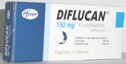
Fluconazole (Diflucan)

DiflucanAn alternative well-known oral drug for candida yeast infections consists of Fluconazole (Diflucan). I am amazed how many women I have seen who have been prescribed Fluconazole weekly on an ongoing basis to counter vaginal yeast infections, sometimes for years, yet with no further recommendations in terms of dietary or lifestyle modifications. Incredibly, some of these women have taken Diflucan for five years or more, one tablet per week. I have helped many women who have taken this drug, and have found that most all can discontinue its use after a period of eight to twelve weeks, even those who have been taking Diflucan for several years.

Related articles:

Side Effects

Get hold of emergency medical aid in case you have signs of an allergic response to Diflucan for example hives; difficulty breathing; inflammation of your face, lips, tongue, or throat.

These are the more serious side effects of Diflucan, see medical aid if you get any:

  • Nausea, upper stomach pain, itching, loss of appetite, dark urine, clay-colored stools, jaundice (yellowing of the skin or eyes);
  • Fever, chills, body aches, flu symptoms;
  • Severe blistering, peeling, and red skin rash;
  • Easy bruising or perhaps bleeding, unusual lack of strength/weakness; or
  • Seizure (convulsions).

More common Diflucan side effects include:

  • Mild stomach pain, diarrhea, upset stomach.
  • Headache.
  • Dizziness.
  • Unusual or unpleasant taste in your mouth.

In my experience, most doctors would prefer to treat vaginal yeast infections with vaginal tablets or suppositories rather than oral medications. But, saying that, they are quick to prescribe an oral antifungal medication or anti-biotic if they notice little result with the topical treatment. Remember, while vaginal treatment is unlikely to cause these side effects, the same cannot be said of any oral antifungal or antibiotic medications. Be sure never to take Fluconazole if there is any likelihood of becoming pregnant.

This drug is not recommended for use during pregnancy. If you have been using this drug and have experienced any untoward side-effects, or if you have been on it for some time, then I would highly recommend an herbal treatment to clean up your liver for at least three to four weeks, because the liver can be affected significantly whilst taking this drug.

Related articles:

Good Tip: Avoid The Repeated Usage of Drugs

Unfortunately, the use of prescribed pharmaceutical anti-fungal drugs and creams, especially if repeated or chronically used, can only lead to the development of stronger strains of yeast that eventually become drug resistant. Higher dosages or stronger drugs are then required which only escalate the problem even further. Many doctors now no longer use Nystatin or even antibiotics because they only weaken a person’s immune system and can damage certain organs like the liver and kidneys. If you ever treat yourself with any over-the-counter preparations and symptoms continue or recur within two months, it is wise to seek the advice from your health-care professional.