All posts by Eric Bakker N.D.

Eric Bakker ND has completed almost ten years of study and has almost almost 25 years of clinical experience in natural and integrative forms of medicine, and has pursued continuous post-graduate study in Australia, America, India as well as in New Zealand. Eric is the past Vice President of the NZ Natural Medicine Association and is currently on their editorial advisory board.

Why Do Practitioners Often Miss The Candida Diagnosis?

Why Do Practitioners Often Miss The Candida DiagnosisThe Common Misdiagnosis of Yeast Infections – But Why?

This is really quite simple to answer, since the effective treatment of candida requires a strong element of dietary intervention and immune system buildup, prestigious mainstream medical journals such as the New England Journal of Medicine and the Lancet have not much interest in this condition as a disease entity. What is happening in New Zealand, Australia and much of the Western developed world such as America is that the pharmaceutical drug industry is pretty much setting the standard of medical practice.

Related articles:

The pharmaceutical drug companies have invaded the academic institutions, you aren’t really likely to see articles published in medical journals on candida yeast infections, and the medical practitioner who relies on medical journals therefore will most likely miss the candida connection with patients.  If you find this hard to believe, just read the mainstream medical journals yourself, and you will soon realize that they are dominated by pharmaceutical drug interests.

Candida Yeast Infection – The Missed DiagnosisThe conventional medical journals have helped to create and sustain over the years a scientific environment which is dictated very much by the profit-filled interests of the drug industry, busy promoting its own financial welfare. It is important to remember that the sales of drugs have become more profitable than any other industrial product globally. And I have always believed that when huge sums of money are involved, then common sense goes out the window.

I have been involved in natural medicine for over half my life and worked with countless practitioners of both natural and Western conventional medicine disciplines and know this to be a fact. I have worked out that you need to have your own interests at heart when it comes to your own health and have a good degree of common sense as well.

Here are the four key reasons I believe that the mainstream medical practitioner miss the boat when it comes to candida yeast infections:

1 – Doctors prescribe drugs which can cause candida

One reason I feel so many medical practitioners virtually ignore yeast infections in their patients is that they themselves prescribe antibiotics, the very drugs which are often implicated in the causation of candida in the first place. How could you then recognize and treat a condition which you yourself could have helped to initiate in your patient? This seems a bit to me like the person who sells alcohol and then turns a blind eye to the violence and other social problems which develop as a consequence to alcohol. The profits are certainly there, but the responsibility isn’t. It may seem a cynical statement at first, but antibiotics are the cause of many health problems globally, especially yeast infections and antibiotic resistant bacterial infections. My recommendations are for you to think carefully before you take an antibiotic, especially if you already have a candida yeast infection. The same goes with the Pill, which is also implicated.

2 – Patients have to be diagnosed before treatment

Another reason why candida is overlooked is that patients need to be diagnosed by the doctor before treatment can be started – and if you can’t accurately diagnose the disease, then you can’t treat it according to the evidence based (medical) practitioner. Many candida patients we see as natural health care professionals have been seen by their doctor, who has dismissed the patient’s concerns because “no clear cause” can be found. This is not the fault of your doctor by any means, conventional medical practitioners focus on treating the symptoms and the disease and not on health and wellness, so you may not get much joy here complaining of burping, bloating, food allergies and a whole host of other signs and symptoms associated with poor digestion, so common in candida.

You will either end up with a prescription for a pharmaceutical drug (like an antibiotic), further impeding digestion, or be referred to a gastroenterologist (digestive specialist) who will in turn poke you and prod you with the various tests on offer and once again conclude that “all is well” and send you back to your doctor. This is my experience regarding doctors with regard to many different digestive disorders that people complain of; patients are often diagnosed as “NAD” (No Abnormal Diagnosis). This is the area where a naturopath will make his or her bread and butter, we don’t necessarily have to diagnose, we just treat.  Bear in mind that conventional medical doctors fail to cure any disease, except to provide symptomatic relief for the patient. And naturally, an experienced naturopath will request an advanced stool test and/or refer to a gastroenterologist when treatment is unsuccessful or the patient is not responding to natural treatment methods. I talk about functional medicine testing (Comprehensive Digestive Stool Analysis) in Chapter 3, and if you have skipped this chapter then I’d suggest that you read it now after you bookmark this page. Personally, I tend to skip and skim through medical books myself, picking out what I need and when I need it and eventually end up reading the book about three times after a year or so. Oh, and don’t be afraid to underline something important in this book because if it is important enough for you then do highlight it.

3 – Doctors may disallow patient’s subjective feelings

I always find that the major foundation for actually determining the presence and for monitoring the actual treatment of a candida yeast infection is the patient’s subjective feedback. Most busy doctors tend to have rather quick (5 – 10 minute) consultations which don’t really allow the patient to elaborate on their problems, and in some sense this  patient has almost become almost a by-stander in the process. Amazing, the side-effects from pharmaceutical drugs can actually viewed as collateral damage when it comes to the treatment. Naturopathic doctors like me take their time, and spend a full hour and sometimes even an hour and a half with their new patient. This is how much time you need to allow the patient to fully express how they feel.  Did I mention the medical clinic I saw in Sydney, Australia where I saw a sign hanging up saying:  “Please present with only one symptom today”.

One conventional doctor I know said that he has become tired of practicing with one hand on the door knob of his room, and one eye on his computer screen watching to see who is in the waiting room – all while a patient is sitting in front of him, which make me realize in an instant why I had my doubts about becoming a “real” doctor many years ago. Could I have helped patients more or achieved better clinical outcomes by having been conventionally trained? I doubt it, maybe in the sense of acute crisis medicine for sure. But certainly not with regards to cases like chronic yeast infections. in some sense it probably would have made me more blinkered and more disease focused rather than patient focused, and that would have been a tragedy in terms of the patient outcomes I now achieve.  A naturopath recently mentioned to me once that he employed a new receptionist in his clinic some years ago. She said how much she enjoyed working in her new job as receptionist because, unlike the medical clinics she has worked in previously, the patients in the new clinic were actually … getting better.

It is incredible how many times I have seen a patient who told his or her doctor that “something is not right” in terms of their health, yet the test results all came back OK. What is the doctor to do in these instances? In most cases, the patient is told that nothing is wrong, and that it may be a case of depression and an antidepressant is prescribed. Some doctors feel obliged to prescribe a drug, others don’t. It all depends on the training of the doctor and their philosophy I guess, but I could not imagine seeing a patient routinely, and after several follow-up visits and not getting a satisfactory result.

Related articles:

4 – Doctors work within normal ranges of tests and prescribe for symptoms

I have found that a “normal” range in terms of blood and stool and other tests can vary considerably from patient to patient. Physicians practicing orthodox medicine always concentrate on the test results, in the belief that by pushing the results back to normal they will resolve the signs and symptoms of the illness, all while the difficulties continue to arise from the root cause – which is rarely if ever fully addressed. It is more likely that they cover up the real problem, and often jump from one symptom to another, depending on the severity of the complaint at the time.

For example, a doctor may treat a patient’s vaginal discharge with local treatment, ignoring the totality of the signs and symptoms the patient presents with all in the belief that these are all separate conditions and not inter-connected. Whilst it is correct that the discharge certainly requires local treatment, it should always be treated as part of a holistic approach to get the true results the patient is longing for – a complete cure of all signs and symptoms of a candida yeast infection.

How To Treat YOUR Candida Yeast Infections Naturally & Holistically!

ericGreetings!

My name is Eric Bakker, Naturopathic Physician, I have specialized in the diagnosis and treatment of yeast infections for over twenty years. I’ve seen just about every type of Candida yeast infection that exists in men, and women and children.

Yeastinfection.org is about the leading causes, how to identify and the best natural treatment solutions for yeast infections. Having the right information means that you will be able to effectively treat your candida yeast infection without having to resort to conventional medical drug treatment.

Have you been told that all your health problems are imaginary, all in your head? Do you suffer with unexplained discharge, itchy vagina, digestive problems, poor energy, depression, and maybe excessive skin irritation? If you suffer from any of those signs and symptoms you may have candida overgrowth which is commonly known as candida albicans.

Step 1 – Take The Candida Yeast Infection Quiz

Try not to skip this, take my candida yeast infection evaluation quiz by clicking here. Select your gender and follow the instructions on the screen. Everything is straightforward. Test can be taken by both male and female patients. CLICK HERE to take the quiz.

   ↓

Step 2 – Read My Holistic Step by Step Elimination Program

Start by reading my comprehensive and detailed article on How and Why You Need to Eliminate That Candida Yeast Infection. In this article I cover just about everything you EVER will need to KNOW about treating YOUR candida yeast infection. The following brief article will give you a quick introduction to the Candida Crusher Program. The information contained in these two pages is based on treating 15,000 candida patients over 25 years of my naturopathic career. CLICK HERE to start reading my Candida Crusher program.

    ↓

Step 3 – Why Should You Listen To… Me?

I started this website to help people just like you that suffer from a candida infection and perhaps have no idea how to treat it. Why should you trust me and information on this website? Then read my about me page by clicking here, on this page you will be able to read about my credentials and find the answer to any questions you might have regarding my authority on candida yeast infections.

If you still have questions or concerns please use the contact me form to contact me with your question. I will try to answer your questions when I can.  Have you seen my Candida Crusher You Tube channel yet? You are sure to find the answer to the question you are looking for in one on my many You Tube videos.

   ↓

Step 4 – Read Some Of The Best Yeast Infection Articles On The Internet

Here are but a few of the many articles I have authored on Candida yeast infections:

Candida Yeast Infection Articles In General

Candida Yeast Infection Natural Treatment

Candida Yeast Infection Conventional Treatment 

Yeast Infection Dietary Supplements

Candida Yeast Infection And Digestion, Diet & Nutrition

Candida Yeast Infection Recipes

  • Why Candida Yeast Infection Recipes?
  • Candida Breakfast Recipes

Candida Yeast Infection Signs And Symptoms

Candida Yeast Infection Testing & Diagnosis

Candida Yeast Infections – Functional (Natural Medicine) Testing

Candida Yeast Infection Causes

Candida Yeast Infections And Lifestyle Influences

Candida And Your Immune System

Candida And Your Digestive System

Candida Metabolites

Systemic Candida Yeast Infections

Candida Yeast Infections And Detoxification

Candida Yeast Infection Case Studies

Female Candida Yeast Infections

Male Candida Yeast Infections

 Children’s Candida Yeast Infections

 Nail Candida Yeast Infections

Skin Candida Yeast Infection

 Mouth And Throat Candida Yeast Infections

Contact me on my My Google+ profile

6 Steps to Eliminate Candida Yeast Infection FOREVER! – Based on 15000 Treated Candida Patients

Warning! For optimal results with candida crusher program I recommend you incorporate good candida supplements, I have a done a video on youtube on how to choose the right candida supplement for optimal results. You can watch it here. Start with canxida remove antifungal take one tablet a day with food, contact me if you have questions about the diet.

Let me show you how it is possible to not only overcome a chronic yeast infection, and also how and more importantly why a candida yeast infection can literally ruin your chances of having a happy life, or the life of your partner or child and why you need to do something about it TODAY!

I’ll also explain why yeast infections are so difficult to eradicate, and the secrets to getting well and help you find a permanent solution to your yeast infection.

If you find yourself reading this page, then you may well be trying to self-diagnose if you have a yeast infection, or are suffering with a candida overgrowth right now, suffering from a condition that can be fully resolved. There are some easy and highly effective ways for you to get well completely and recover entirely from a Candida yeast infection, and chances are that you have come to this page to find that solution. You have come to the right page in that case!

Perhaps you are a person who has only recently figured out that he or she has a yeast infection? You will be able to click on many different links on this page and then be able to read the information you were looking for. Candida yeast infections are NOT like simple bacterial infections, it is not just a matter of taking a few pills like an antibiotic for a couple of days to knock-out this infection!

On the other hand, you could be a person who has been dealing with a yeast infection for some time and have taken probiotics or an antifungal supplement like garlic, oregano oil,  grapefruit seed extract, SF 722, Syntol, Candeze, etc; only to discover you get partial relief, and become unwell time again down the track? It looks like you are looking for an effective and quick solution! There are plenty of options on this page too.

Maybe you one of those people who has been suffering with a chronic yeast infection for many years and have tried every trick in the book to get rid of it. You may have spent tens of thousands of dollars like so many patients I have seen over the years. But what is even worse than wasting all this money, it the fact that you are wasting your life and ruining any chances of a happy life by not curing your yeast infection.

This is one of the main reasons why I wrote my book Candida Crusher, to give people the right information to enable them to cure their own chronic yeast infection in the comfort of their own home.

This page outlines the Candida Crusher Program, the permanent yeast solution.

The Candida Crusher Program

Signs and Symptoms Of A Yeast Infection

Do you have a candida yeast infection? For women who want to know if they have vaginal thrush, they may want to read the page Thrush – Vaginal Candidiasis Diagnosis. If you are not sure whether you have a Candida problem or not, you may like to read the page the Signs and Symptoms of Candida Yest Infection. Did you know that there are many ways to discover if you have candida? You may like to read the page the 5 Simple Home Tests for Candida. Ladies may like to read the 10 causes of vaginal yeast infections  and the 3 causes of vaginal inflammation. After you have read these pages, don’t forget to hit that back button to come back to this page, the Candida Crusher Program page.

Conventional Medicine Tends To Ignore Yeast Infections Altogether

Most conventional doctors I have known think that yeast can overgrow only in an immune system that is severely suppressed. For example, if a patient has AIDS or cancer than they may prescribe powerful anti fungal drugs (depending generally on the results of a test), and with negative test results will most probably send you home with a diagnosis of “irritable bowel syndrome”. What doctors are looking for here is known as systemic candidiasis and this is a most serious condition that occurs in persons with suppressed immune systems (for example those who have undergone chemotherapy or AIDS patients who have experienced a total collapse of their immune system). This form of candidiasis can affect the lungs, liver, kidneys and brain. The candida I am referring to in this series is a much more common phenomenon, and is a functional overgrowth which involves the excessive proliferation of candida yeast species in the gastrointestinal system. This overgrowth can take on a more insidious form, as mentioned in an earlier article. Candida yeast skin infections can affect you systemically, however.

I can tell you with 100% absolute certainty that candida does occur in people who do not have AIDS or cancer, or those with normal well functioning immune systems. Candida overgrowth, like many chronic complaints which remain unresolved with conventional methods, is best treated with several stages in mind. I will elaborate on these methods in this article but will for the sake of brevity will focus on the treatment, including some aspects of the candida diet.

Do You Have Athlete’s Foot Or Jock Itch?

The two common complaints I see in many patients are Athlete’s Foot as well as Jock Itch. Both of these annoying complaints can be remedied and completely eradicated by following my principles. Maybe you have Ringworm or Tinea versicolor. Are you using drugs to “cure” these complaints? You will find that you will be using them a long time, and when you stop using them the condition will come back with vengeance. There is only ONE way to cure candida permanently, and that is to stamp out the cause. Why not complete my Yeast Infection Self-Evaluation Test  right now? It only takes a few minutes and you will know pretty soon if you have a mild, moderate or severe case of yeast infection.

Do You Have A Male Yeast Infection Problem?

Yeast infections seems to be thought of as primarily as a “women’s complaint”. A male patient who came into our clinic for treatment with his yeast infection had consulted a medical doctor, only to be told that “only women get yeast infections”. Men may like to read the following articles. Or, perhaps you have a man who may have a yeast problem that requires treatment, but he is oblivious to the fact. This is likely to be the case, as three quarters of patients we see with yeast infections are females, but men suffer equally as bad. I’ve got guys covered in my book Candida Crusher, and have some great hints and tips including a three-stage program how they can eradicate their yeast infection.

Medical treatment: Topical and Oral Anti-Fungal Medications

In extreme cases, you doctor may prescribe oral anti fungal medications for a bad case of thrush or internal gut related candida infection if it is extensive or severe and / or a condition resists topical anti fungal therapy. Some doctors I know routinely treat women with thrush with a powerful anti fungal drug called Fluconazole, which in some cases sorts the problem but for most women it is far from over. Many women I have seen take Fluconazole once per week – ongoing. How silly is that, to stay on a drug indefinitely without trying to remedy the underlying causes.

Their sugar, chocolate or alcohol rich diet was never addressed and their thrush returned within vengeance weeks to months later, prompting the doctor to prescribe another round or even stronger “top shelf” antibiotics. So many patients I have seen have been prescribed a pharmaceutical anti fungal for either a skin, vaginal or intestinal yeast problem, and often recurrently. Some of the BEST topical products are outlined in great detail in chapter 5 of Candida Crusher, get your copy today. The 5th chapter is worth the price of this most comprehensive book alone. Stay away from Canasten, or those pharmaceutical drugs used in applicators. The Tea Tree oil products are superior and no chance of side-effects or candida suppression.

Probiotics

Isn’t it interesting to note the big interest in probiotics lately, when natural health-care professionals have been recommending that people eat foods which enhance their bowel flora naturally for almost one hundred years. Natural health practitioners were recommending patients to eat cultured foods containing lactic acid such as sauerkraut and yogurt long before any probiotic supplement was ever developed, even as far back as the 1920’s and 30’s. Lactic acid today is widely used for reducing the number of pathogenic bacteria like E.coli, salmonella, campylobacter, and listeria on beef, pork, and poultry during the slaughtering process. Fermented foods like sauerkraut and yogurt are both foods which are rich in lactic acid, and you only need a small amount daily to make the difference if you have chronic candida. I’ve written extensively on fermented and cultured foods as well as probiotics in my book Candida Crusher.

It is known that lactic acid in yogurt has a most beneficial effect on improving not only the bowel flora by inhibiting pathogenic bacteria, but favorably affecting several aspects of immunity. Are you eating yogurt? Try to avoid yogurt in the little plastic tubs with artificial sugars, instead  chose naturally soured yogurt which has no fruit nor added sugar. Ask your organic shop, they will surely guide you in the right direction.

Commonly Prescribed Anti-Fungal Drugs

  • Itraconazole (Sporanox)
  • Fluconazole (Diflucan)
  • Ketoconazole (Nizoral)

Itraconazole and fluconazole are claimed to be relatively “safe drugs”. Side effects can range from nausea and vomiting, constipation or diarrhoea, headache, dizziness, abnormal liver function tests, allergic skin rashes such as dermatitis, enlarged breasts (in males) and adrenal suppression. Here is a picture of a patient who developed a skin reaction after an antibiotic. I think I’d rather stick with the candida infection thanks…Besides, some species of candida are resistant to “azoles”, and azole resistance is increasing, especially in immuno-suppressed patients who are prescribed long courses of drugs. I have written an entire chapter in Candida Crusher on medical treatments, and explain in detail about the “zole” drugs your doctor is likely to use, and what your natural alternatives are.

Nystatin


Like many other anti-fungal and antibiotics, Nystatin is of bacterial origin. It was discovered in the 1940’s by two clever female scientists who were looking for an agent in the soil which may be useful in controlling fungal diseases. It was called “Nystatin” after New York, the state it was first discovered. Nystatin is a generally well tolerated drug because very little is absorbed from your intestinal tract. I have found that it is well tolerated and have recommended it after first reading about it in Dr. William Crook’s book “The Yeast Connection” in the 1980’s.  The usual starting dose is 500,000 to 1 million units, four times daily. (Each tablet is 500,000 units or 1/8 teaspoon of the powder) I have recommended patients to talk to their doctors about Nystatin; it is the safest of all drugs your doctor could prescribe for a yeast or fungal condition in your body.William Vayda, a notable Sydney naturopath from the 1970’s and 1980’s stated in his article: “Systemic Yeast infection – part two”. Nature & Health. (1986). “Nystatin is one of only a few drugs that can destroy and eliminate Candida albicans from the gut and can kill the toxins generated by Candida albicans throughout the body.

Dr. Orion Truss, who inspired Dr. Crook to write his landmark book about candida used Nystatin extensively in the 1970’s to discourage yeast growth in his patients, and was one of the first medical doctors to notice the connection between an antibiotic and candida infections. Naturopath William Vayda advised readers to discard their usual aversion to pharmaceutical drugs in the case of Nystatin, in view of its superiority over natural treatments for the systemic elimination Candida albicans. My experience with Nystatin however is that it still is a pharmaceutical drug, it works in only some cases and has some residual side-effects in some patients. but I now prefer to recommend natural medicines. You may not prefer to use Nystatin and these days there are many more natural ways to clear candida, so let’s explore natural ways to treat this annoying complaint. I have certainly been no huge fan of Nystatin the past several years, and have seen the massive “die-off” it has caused with all too many patients in my clinic. And Fluconazole? – just avoid it, you will find that when you break the cycle of using pharmaceutical drugs and use natural medicines you will get a much better result with yeast infections in the long run. Those who recurrently use drugs will develop a dependence on them, not so with natural medicines.

Step 1 – Starve That Beast Called Yeast

Change Your Diet

Don’t feed candida on the foods they love. This means avoid like the plague any refined carbohydrate foods like white flour, and especially any refined sugars such as high fructose corn syrup, glucose, fruit juices and even honey. There are so many books and articles I have read relating to candida eradication, I have tried countless diets with patients but have achieved much success with the following diet which I have found actually works for the majority of yeast infection sufferers.Not how I said the “majority”? And that’s because not every single person with a chronic yeast infection will find this diet to be perfect for them, some will need to tweak it a little to suit their needs.

The thing is to use common sense, and not to rely exclusively on diet books! Mark Twain once said: “be careful reading books on health, you may die of a misprint”. If you crave it – then stop eating it. If is very sweet in your mouth and you know it is wrong – stop eating it. Just like the beer bellied couch potato sports enthusiast, or the sugar plum fairy who likes her late afternoon wine and nibbles, candida prefers refined snack type foods, alcohol like beer and wine as well as chocolate, ice cream, donuts, take-out and candy. Yeast hates a healthy diet full of fresh vegetables, fruits and high quality proteins devoid of refined carbohydrates. Read: Yeast Infection And Carbohydrates. I have never been convinced that patients need to strictly avoid all fruits with candida issues, but do request that those with major problems be quite strict for the first three weeks and then ease up a little. If you suspect a yeast infection, it is useful to take note of my dietary advice since it does not contradict the general guidelines for good healthy eating and has made an enormous difference in the lives of so many patients I have seen who, unbeknown to them, were being made miserable by this condition. Just do the diet strictly for three weeks, then include more fresh fruits. Stay on this diet for as long as it takes which could be 3 – 6 months. You will feel great and will have probably made some long term changes as your health has improved in many different ways. Want to learn a lot more about diet, nutrition and Candida? Then you will need to get the book Candida Crusher, because it contains more than 200 pages of what to eat and how to eat it, more information than any book currently available on this topic.

Step 2 – Suppress And Eradicate That Yeast Overgrowth

But Be Careful Of “Die-Off”

Some people who talk about suppressing and eradicating a Candida yeast infection like to use the word “kill” when it comes to candida treatment, but killing is not necessary. Wars never solve problems, they just create more wars. Today I rather suppress yeast and build good bowel flora and have found it much more satisfactory and an even more effective approach without needlessly aggravating the patient. Some tend to think the “die-off” is unavoidable, but it is not necessary.

Some therapies that successfully treat candida by causing the rapid death of large numbers of yeasts can cause a “die-off” reaction (known as the Herxheimer reaction) during which great amounts of toxins are released from the dead candida microorganisms. These toxins can cause allergies and rather severe reactions in many people. Some patients (prematurely) abandon their candida treatment under the mistaken belief that this “die-off” reaction and its associated allergic reactions are an indication that their candida over-proliferation is worsening rather than diminishing. Read: Yeast Infection Die-Off  and Candida Yeast Infections And Drunk Disease.

Here is a list of some of the most effective things to take, in no particular order. I have not mentioned dosages because I tend to customize dosage levels for each individual patient, and what works for one may aggravate another quite badly.  If in doubt, use the “go low and go slow” method when it comes to supplementation. Get help, if these things do not make a significant difference then seek out a good naturopath or nutritionally orientated doctor who is genuinely knowledgeable about the treatment of candida. While you can self-prescribe, I think it is best if you work in with a Candida experienced health-care professional rather than follow the advice from some magazine or a friend. Candida treatment has its ups and downs, and a program tailored to suit your specific needs will be much more effective than just adopting a yeast free diet and taking a bunch of supplements and hoping for the best. I’ve devoted a significant section (70 pages) of my book Candida Crusher to explaining in great detail the best dietary supplements and special foods which will help you eradicate a yeast infection.

  • Caprylic acid: Caprylic acid is a very effective, broad-spectrum anti-fungal monounsaturated fatty acid in a capsule. It works well and I have used it for years. It is more potent against detrimental fungi than many commonly used anti-fungal supplements. I give it three times daily for about 6 weeks then reduce to twice daily. It works better if you have a teaspoon of extra virgin olive oil daily as well. Be sure to include some coconut oil and coconut milk regularly in your diet – they contain capric and caprylic acid as well, though not as concentrated (nor sustained release) like a supplement would contain.
  • Digestive enzymes: These are essential to break down the foods you eat into usable nutrients, especially where there is a candida overgrowth which depletes hydrochloric acid and digestive enzymes in your stomach. Supplemental pancreatic enzymes and supplemental proteolytic enzymes (such as pancreatic amylase, Bromelain, chymotrypsin, lipases, papain and trypsin) will all help to significantly reduce the discomfort caused by any Herxheimer (“die-off”) reactions.
  • Good probiotic supplement.  I generally recommend that you take a combined enzyme/probiotic supplement, they don’t affect each other and it saves you having to take a handful of pills. A most effective candida probiotic should contain Saccharomyces and Lactobacillus rhamnosus species. I recommend taking probiotics twice daily before foods.
  • Colloidal silver. This product works in suppressing and even wiping out candida. Here is a small section out of a study completed by the School of Medicine, Department of Microbiology and Immunology, Temple University, Philadelphia, Pennsylvania, USA, “Preliminary studies on your colloidal silver preparation (1500 ppm) show it to be effective in inhibiting and killing strains of Candida albicans. Three strains of Candida were tested and they were all killed by the preparation at between 46 and 93 ppm. Growth was inhibited at between 0.7 and 1.4 ppm”.
  • Pau d’arco Tea. This tea from the South American tree has a long folk use in the treatment of infections. Several compounds from Pau d’arco have demonstrated anti-Candida effects. Drink a cup of Pau d’arco tea twice daily, and take in supplemental form as part of an anti-fungal supplement.
  • Garlic. This is one of my favorite and most effective anti-candida measures. Garlic suppresses and kills most forms of detrimental fungi, bacteria, protozoan and viruses. I have for many years had a large bowl of garlic cloves on my kitchen bench and use fresh cloves in most of my cooking along with plenty of fresh herbs such as oregano, sage, basil, thyme, and parsley. These herbs were introduced into cooking many thousands of years ago to inhibit bacteria and eliminate parasites, not to flavor foods! Do you eat garlic daily? It will help your digestive, circulatory and immune system in many ways. While you can supplement with capsules of aged or odorless garlic, fresh is again the best. Can’t tolerate garlic? Then get the odourless capsules or tablets.
  • Oregano oil. Another good yeast eradicator is oregano, it is the best leafy herb to counter candida, so be sure to eat fresh oregano; use it in salads, egg dishes, etc. Make sure your anti-fungal supplement contains oregano oil.
  • Grapefruit seed extract (GSE). This is possibly the most potent of all yeast eradicators, and studies have shown that it can help to rid your body of many different kinds of bad bacteria, yeasts, and parasites. Make sure your anti-fungal product contains it.
  • A top quality vitamin and mineral as well as Omega 3 supplement. These are important since candida taxes the body’s own reserves of vitamins and minerals. Take a quality multi-vitamin every day, along with a quality Omega3 supplement.

Step 3 – Drop The Drugs And Yeast-Promoting Foods

Antibiotics Are THE Biggest Cause

Avoid broad spectrum antibiotics and immuno-suppressant drugs like cortisone, prednisone and inhaled steroids, birth control or hormone replacement therapy pills whenever possible. Today’s powerful antibiotics are able to suppress good micro flora and cause candida overgrowth in just a few days.  Read: Yeast Infections And Antibiotics

But wait, there’s more, in New Zealand for example we are feeding around 70 million chickens per year low doses of antibiotic every single day of their lives. You may be surprised to hear that there are several strains of antibiotic resistant bacteria found in conventionally (caged) raised poultry, buy free range chicken for this reason. What country do you live in, and how are the chickens raised and processed where you live? Do you eat supermarket chicken? Chances are that you will also be consuming antibiotics in a very low dose, and it doesn’t take a rocket scientist to understand that very long-term low dose antibiotics is the same as short term high dose. The solution? Look for clean, preferably free-range chicken and eggs and avoid the well known commercial brands which almost always contain traces of antibiotics. Some of these companies are clever, and while they promote themselves as “our chicken contains no growth hormones”,  but they do contain traces of antibiotic residues. How else can you keep thousands of birds healthy when you stuff them in cages, keep them in the dark and give them a totally unnatural lifestyle?

It is preferable to eat organic meats whenever possible, and this includes beef, lamb and pork. Free-range or organic deer meat (venison) or buffalo (if you live in USA) and ocean fish are probably your best protein choices because they haven’t been “fiddled with”. Your grandparents probably had a few chickens and grew some vegetables. The book Candida Crusher contains plenty of information about antibiotics, and outlines the medical treatment of candida. Your doctor will most likely only see a vaginal yeast infection as being the main yeast infection in their patients, whereas I see them manifest to a large degree in the digestive system, and antibiotics are one of the biggest culprits. I’ll show you how to not only recover fully from a yeast infection in Candida Crusher, and how you can avoid this condition for life.

You don’t need to take antibiotics routinely for trivial infections as a “precautionary measure” as some doctors put it. We have become a germ-obsessed society, and you will have no doubt seen those advertisements for cleaning products on your television which focus on the importance of keeping your home surroundings literally sterile. The cleaner we want to be and the more drugs like antibiotics and germ-killing chemical cleansing agents we use to achieve this objective, the more we increase our risk stronger and increasingly drug-resistant strains of bacteria, fungi and viruses.

Step 4 –  Rest Your Immune System

Stop Allergenic Foods For Now

Food allergies are most common with candida. The things you crave are frequently what the yeast itself craves. Try to identify any possible sensitivities or allergies and weed them out. This can be of enormous benefit to you, as you will be side-stepping those foods and drinks that are challenging your immune system the most. Steer clear of milk products, baked foods made with wheat flour, and all foods to which you suspect you might be allergic or sensitive to. Reducing the workload on your immune system enables it to have sufficient energy and powers it up to allow your body to finally eradicate that candida yeast infection. I have found this to be a key but often overlooked factor to a complete recovery. The immune system is the one that finishes off the job, but only if it has the energy to do so. Eating foods that have a high allergy potential or typical yeast promoting foods like conventionally baked and risen breads and alcohol tires out your immune system since it is forced to shadow box any antibodies it has built up that mimic candida.

Avoiding the foods most commonly associated with allergies and sensitivities allows your immune system to rest up well, giving you the best chance of fighting a yeast infection.The foods I would like to see you avoid for several months (and if you do you may want to avoid them for a long time because you will feel great) include: all “risen” breads (using conventional baker’s yeast), all soft cheeses (in those foil wrappers), wine, beer and spirits and plain white vinegar, chocolate, peanuts, grapes and sweets. In this category I would also place bananas and oranges and mandarins (lemon and lime is OK) as well as ALL dried fruits. Ask yourself how sweet your treats are, if you simply must have something sweet then have a fresh pear for example.

Food Re-Introduction. In Candida Crusher I explain in great detail all about how you can best re-introduce different foods into your diet after you have cleared that yeast infection. I even give you charts on different food groups on which foods your should first introduce, and which ones last.

My book candida Crusher contains an extensive amount of information on food allergies and food intolerances as well as food-reintroduction methods. I explain in great detail all about the immune system and candida, as well as how stress affects your immune system and ultimately increases your susceptibility by lowering your resistance. Have you got your copy yet? It is available on candidacrusher.com

Step 5 – Identify And Avoid Chemicals And Toxins

Detoxification – Clean Up Your Body

To further reduce load on your immune system, avoid as much as possible car fumes; chemical pollutants; insecticides, sprays, artificial colors; preservatives; emulsifiers and as mentioned food allergens as well as any inhaled allergens. Do you have amalgam (mercury) fillings and can’t seem to shake recurrent yeast infections? Take a look at what mercury does to your gut; every time you swallow you ingest a tiny amount of methylated mercury in your bowel on which candida can potentially thrive. Why not do a cleansing program yourself? It is a quick way to clean up the body. My book Candida Crusher devotes an entire chapter to cleansing and detoxification, and you will be able to learn the best approach to a short cleanse, a more in-depth detoxification protocol as well as heavy-metal cleansing.

Step 6 – Lifestyle Changes

Eradicate Candida For Life

Your lifestyle should be your main concern as far as yeast infection recovery is concerned, and that is why I have left some of what I consider to be some of the best information until last in my book Candida Crusher. As far back as 1983, Dr. William Crook (The Yeast Connection) pointed out that the influence of lifestyle was paramount in both the creation and the ultimate recovery from a yeast infection. Unless those with chronic yeast infections change their lifestyle to reduce and then eliminate these causative factors, complete healing is seldom accomplished. I have certainly discovered this to be the case in my practice after many thousands of patients, and have noticed that those who are the most committed to recognizing the causes of their yeast infection and make the appropriate diet and lifestyle changes long-term are the ones who get the best results. You’ll find over a hundred pages in Candida Crusher that relate to lifestyle changes.

cover_3d_02

Candida Crusher – Cure Your Yeast Infection Naturally Forever

Candida Crusher took me three years to write and is based on my 25 years of clinical experience and treating over 15000 candida patients, it is FINALLY AVAILABLE. You can get your copy today at special discount price $47 by clicking the link below.


arrow_flashClick Here to to find out more!


The Candida Crusher Diet (MEVY DIET)

This diet works best with CanXida supplements, Canxida Remove, Restore and Rebuild. If you require further information then please feel free to contact us.

My Candida Crusher book provides extensive information about how to rid yourself of Candida – for good – and most likely is the most informative book available today. However to assist you further in crushing your Candida infection my website provides you not only with an interactive yeast infection test which you can find here. But also a range of videos on my YouTube channel. If you can’t find the answer to your question you also have the option of subscribing to my YouTube channel and emailing me. I’ll be pleased to answer any questions as frequently as I can and, if you require anonymity, then it is guaranteed – just don’t forget to mention it in your email.

Coming in at nearly 800 pages my Candida Crusher Book offers the most comprehensive information available which will enable you to rid yourself of this opportunistic yeast infection – for good. Although my web pages offer you an insight into the basics of my diet and lifestyle plans, which gives you an excellent grounding to resolving Candida issues, those requiring in-depth information into the causes, effects and treatments may want to invest in my book to enable resolution of such issues.

Related articles:

The Basics of the Candida Crusher Diet

1. Although most people are often advised to avoid junk foods, it has to be remembered that these include: White processed sugar, white processed flour and soda drinks. Junk foods are not limited to takeaways and microwave meals.

2. Introduce a wide range of nutritious and organic foods in to your diet.

3. Sugars of all kinds are a food-fest for Candida and should be avoided. This includes: chocolate, honey, molasses, maple syrup and sugars of all kinds.

4. Initially avoid all fruits (fructose is a sugar too) with the exception of those in the list below, including fruit juices and dried or candied fruits.

5. Don’t eat the same food types every day. Remember to rotate your menu choices.

6. Low carbohydrate vegetables, seafood, eggs and lean meats are better food choices.

7. Fresh, natural and healthy is best. Organic is better and locally produced organic is better still. Avoiding anything that comes out of a packet is, generally speaking, a good move because these are usually full of additives, sugars and colorants.

Good Food Choices

Although it can initially seem that most Candida diets are restrictive with my Candida Diet Program there are many foods which you can eat freely. Once you start on my diet you will also often find that, as your Candida becomes under control, your cravings for poor quality foods starts to diminish.

Vegetables

Although vegetables can be distinguished by high and low carbs, most contain simple carbohydrates. I advocate eating the ones listed below, and, when it comes to cabbage, at least 1 cup per day. Eating vegetables raw is not particularly beneficial (I explain this in more detail in my book) and lightly steamed vegetables are always a better choice. The big exception here is garlic. Eating crushed garlic raw releases enzymes which are beneficial to the digestive processes.

  • Asparagus
  • Bean Sprouts
  • Beets
  • Broccoli
  • Brussel Sprouts
  • Cabbage
  • Capsicum
  • Carrots
  • Cauliflower
  • Celery
  • Cucumber
  • Eggplant
  • Endive
  • Garlic
  • Kale
  • Lettuce
  • Leeks
  • Mustard
  • Okra
  • Onions
  • Parsley
  • Radishes
  • Salad greens
  • Spinach
  • String beans
  • Tomatoes
  • Turnips
  • Watercress
  • Zucchini

Fruits

Although I advise for fruits to be avoided, what has to be remembered is that this rule applies only to the ‘initial’ steps in the diet and is not advised long-term. What I mean by initial, is that for at least 2 weeks fruits are avoided but then these can be gradually reintroduced. Some fruits however are still acceptable and the world won’t come to an end even if you break the 2 week rule. These include: Avocado (up to 1/2 daily), Blueberries (only a small daily amount), coconut (fresh only), strawberries (maximum 8 per day). Also you can have both lime and lemon juice, the latter being noted for stimulating gastric juices.

Vegetable juice is fine but you must keep all the fiber in it, although fruit juices (other than lime and lemon) should be avoided for at least 2 months. The main fruits to avoid include, grapes, dried fruits and melons of any kind.

The Importance of Protein

Protein is needed to form amino acids and it is one of the main constituents of my Candida Crusher Diet.

Meat and Eggs

Meat from animal sources is the most easily accessed form of convertible protein. I recommend eating at least 2 portions per day. If you cannot tolerate this amount in 2 sittings, then simply break the same amount into smaller, more easily digestible meals. If you suffer from constipation or diarrhea eating this amount of meat, then build up to it gradually over a period of 2 or 3 weeks and allow your digestive system to accustom itself to the changes.

The meats I recommend are lean, organic cuts of; Beef, chicken, lamb, pork, turkey, veal or venison. Seafood also provides much the same source of protein and the best ones to try include: Cod, crab, crayfish,mackerel, paua, sardines, shrimp or tuna. This selection includes fish which is frozen or canned but breaded fish is best avoided and canned products should be in water or olive oil and contain no additives or sugars.

Eggs too are a good source of protein but should be limited to 1 per day.

Vegetarian Options

Most people practicing vegetarianism already have a good idea of the best sources of protein, however for my diet they need to include high protein nuts, seeds and grains. Some will prefer tofu or other soy sources such as tempeh, or will at least use these to vary their menu. Of course lentils, beans and peas are good protein sources and most vegetarians consume these as part of their regular diet. I have done a comprehensive video on my youtube channel on the topic which you can watch to learn more.

Nuts

Nuts are a great source of protein and are suitable for vegetarians and meat eaters alike. However remember to buy only raw fresh nuts and avoid the salted, sweetened, flavored and roasted varieties. My favorites for this diet include: Almonds, Brazil nuts, hazelnuts, macadamia and walnuts. Sunflower and sesame seeds are also a good, healthy accompaniment.

Beverages

For the first 2 weeks of my diet avoid fruit juices – excluding lime and lemon which have already been mentioned as aiding digestion. Vegetable juice too is to be avoided if it doesn’t include the fiber. After 2 weeks fruit juices can be slowly introduced back into the diet.

Alcohol should be avoided, permanently, as should all sodas.

An herbal tea such a Pau d’arco or Horopito are both considered to be antifungal and work well in crushing Candida. Other alternative beverages include water which can be flavored with lemon or lime and herbal teas – but remember to leave out the sweetener.

The First 2 Weeks (Are the Hardest)

Many people are disappointed to learn that on the Candida Crusher Diet their infection will not be resolved in a matter of 24 hours or so by taking a supplement. And, in our ‘quick fix’ society this often comes as a disappointment. However when it comes to Candida infections what most people should be aware of is that if you take the time to resolve it the right way then it’s gone – for good! Candida is a chronic condition that takes years to develop so it should come as no surprise that, despite what some supplement manufacturers might promise, it cannot be resolved overnight or over the course of a few days.

What might also come as a slight disappointment is that the first 2 weeks on the Candida Crusher diet are the most difficult to negotiate. The reasons the first 2 weeks are the hardest are twofold: Firstly, you are embarking on what is essentially an elimination diet and by anyone’s standards this is usually an uncomfortable task. Secondly, it is quite likely that, because your yeast overgrowth has been the driving force behind some of your food cravings, then withdrawal symptoms will result.

The good news is that once you have negotiated this slightly rocky road, then you are well on the way to achieving permanent recovery. And, after only 2 or 3 weeks you can start introducing some of your favorite foods back into your diet.

Starch and Sugars in Vegetables

One problem people find themselves facing is in deciding which vegetables to eat. This is because many sufferers are unaware that some vegetables contain starches which are actually forms of sugar. To get around this problem I provide some guidance on which vegetables to avoid in the first 2-3 weeks and they include:

Beans, baked potatoes, Lima beans, peas, pumpkin, snow peas, squash and pumpkin.

If these are your favorites then take comfort in the fact that after the first 2-3 weeks on the elimination diet you will be able to start introducing them back onto your menu, but in small, infrequent servings.

Grains

Grains are a sticky subject at the moment when it comes to dietary regimens and this is mainly due to many people having an intolerance to gluten. Some will just go for avoiding wheat and others will abstain not only from wheat but also oats, rye and barley. Oats actually don’t contain gluten and they can be tolerated by some people, but on my diet I suggest that not only the above grains are avoided but also all grains for at least 3 months. This, obviously, includes all products made with grains and which usually include yeast which can also aggravate a Candida infection. If I were to make exceptions then these would be, amaranth, buckwheat, brown rice and quinoa.

Because gluten is the main offender when it comes to intolerances and, because oats don’t contain gluten, I usually offer to make one exception to the rule – rolled oats or porridge for breakfast are acceptable – but without any sugar, honey, jams or jelly on the top!

Breads, Biscuits and Baked Goods

As I stated in the grains section it is preferable to lay off products which are made with both grains and yeast. Unfortunately this rules out most baked goods. Many also contain sugar which, as we know, simply feeds a yeast overgrowth. Certainly abstain from these products for at least the first 2-3 weeks elimination period, and, if possible, a whole 3 months before you try introducing them back into the diet slowly. The good news is that because you will have killed off a good amount of the yeast infection by this time, your desire for sweet products will be much reduced anyway.

Foods To Avoid When You Have a Yeast Overgrowth

There is no doubt that many foods are best avoided forever simply because they are often an underlying cause of yeast overgrowth in the first place. However most foods on my diet are avoided for somewhere in between the first 3 weeks on the program and avoiding for the duration of the Candida Crusher diet. If you are unclear about any guidelines or want to ask about a food product which is not included here, then please feel free to email me.

Sugar Foods

It is sometimes difficult to establish which foods contain sugar simply because many are ones which actually convert to sugar within the body. For example, lactose is a dairy sugar in milk and dairy products, and it is converted by an enzyme, lactase in the digestive tract. Yet there are more obvious ones such as honey, molasses, maple syrup and jellies which, quite clearly, should not be ingested for at least the first 3 weeks of my program. Others however which you might not immediately think of include:

  • Corn syrup
  • Date sugar
  • Fructose
  • Galalactose
  • Glucose
  • Glycogen
  • Maltose
  • Mannitose
  • Maple sugar
  • Sorbitol
  • Sucrose

And don’t forget to also abstain from Stevia and Xylitol.

Packaged and Processed Food Sugars

Although most people tend to think of additives as being chemically synthesized compounds which are added to foods, one of the main additives is actually…sugar. Most products, from tinned tomatoes through to canned fish and coconut, actually contain refined sugar and usually in the form from at least one in the list above. Remember to read labels and avoid anything with added sugar in any form.

Breads, Cheese, Milk and Pastries

Since we have already established that the main food offenders in aggravating a Candida overgrowth are grains, sugars and yeasts, then all the above products need to be avoided for at least the first 3 weeks of the diet.

Cheese contains not only dairy sugars but also many molds. Molds are simply variants of fungi and can exaggerate a Candida problem.

Foods which are acceptable, and which can be eaten in reasonable quantities are what I call the Mevy foods. These are Meat, Eggs, Vegetables and Yogurt. These products will feed the body while simultaneously starving a yeast overgrowth.

Alcohol

Alcohol of all types should be avoided. Not only will it aggravate a yeast overgrowth but it is also now suspected of being a primary cause. This has been established because research has been done which indicates that most people suffering from a dependence on alcohol also have gut dysbiosis – an imbalance of gut microflora.

I provide several articles which discuss alcohol and Candida specifically and two can be found here… And here… However the general rule is quite simple to remember – avoid alcohol…forever.

Condiments and Sauces

Although vinegar is said to stimulate the digestive tract unfortunately many mass produced products contain not only sugars but also they accumulate molds – neither of which are conducive to ridding yourself of Candida. Although they are not manufactured with molds included, these simply grow as they sit for long periods on shelves either inside the refrigerator or outside. If you have these products in your kitchen then check out the use-by dates and the condition of the bottles and jars and dispose of them if necessary. Also check the ingredient lists for added sugars. The main ones to avoid are:

  • Barbecue Sauce
  • Chili Sauce
  • Horseradish
  • Mincemeat
  • Mustard
  • Shrimp
  • Steak Sauce
  • Tomato Sauce
  • Tamara
  • Worcestershire Sauce

If you want to get around the sauce problem then make your own from an organic virgin olive oil and freshly squeezed lemon juice which is great as a salad dressing.

Malted Products

Although products containing malt can be psychologically comforting, they should be avoided for the first 3 weeks on the Candida Crusher diet. This is because malt is made from grains, and the products themselves usually contain added sugar in one form or another. Product names vary depending on the country but most are sold as night-time beverages.

Processed and Smoked Meats

Although I advise eating meat at least twice a day on the Candida Crusher diet, I am referring to that which is lean, organic and uncooked at purchase. Processed and smoked meats generally, at best, contain both preservatives and you might be surprised to learn, sugar. Often canned and pickled fish products come into this category as do hot dogs, corned beef and even pickled tongue. Because of this you should avoid these products for at least the first 3 weeks of my diet and after introduce them slowly back in. Even then they should be eaten only infrequently.

Fungi

Edible fungi should be avoided but only for the first 3 weeks of my diet plan. After that you can reintroduce this food back into your diet.

Melon

All melons should be avoided and particularly watermelon, honeydew melon and cantaloupe.

Coffee and Tea

It is preferable to avoid coffee and tea if at all possible. If not, then at least try cutting back your daily consumption. Neither can you add milk or sugar during at least the first 3 weeks on the diet. If you can manage to avoid such drinks totally during my diet then all the better. Herbal teas offer some alternative options but it has to be remembered that these are not teas at all but simply different plant mixtures. Green tea is a viable alternative but white tea, which is not as easily obtained, is slightly more palatable and contains more antioxidants.

Fruit Juices and Sodas

As I’ve already said above fruit juice of all kinds with the exception of fresh lemon and lime, needs to be avoided for the first 3 weeks. Sodas should be avoided forever. When it comes to juices remember that even ones which appear to be healthy, such as apple, pineapple and orange, are only going to exaggerate your yeast infection. This includes products which are fresh, frozen, canned or bottled. Fitness or energy drinks are a definitely no-no and come under the no-soda rule.

Candied and Dried Fruits

Often dried fruits are seen as being a healthy option by some people. This is more-so due to their inclusion in products like muesli. Yet these fruits are actually full of concentrated sugar which is probably why many people crave an extra bowl of cereal in the mornings! Some dried fruits, whether in cereals or otherwise, contain more concentrated sugars than others, so ones to avoid in particular include, apricots, dates, figs, prunes and raisins.

Leftovers

Although it is good economic practice to save leftovers instead of throwing them away you have to remember to do it properly. Simply covering food with film and leaving it in the refrigerator overnight or over two nights, still leaves it open to growing mold and spores. Inadequate re-heating can fail to kill those spores and can result in your ‘topping up’ the fungi and yeasts already lurking in your body. Where possible freeze leftovers and remember to defrost and reheat thoroughly before consuming. When it comes to leftovers, the freezer is your friend!

Related articles:

Summary

There is no quick-fix to ridding yourself of a yeast infection. However if you do it properly then not only will your ailments resolve, your general health and mental outlook will also benefit. Imagine not to be driven every day by cravings for sweet stuff or alcohol or coffee. These things drip-drip into our lives and, before we realize it, they are suddenly driving forces of our daily routine rather than being small, insignificant parts of our existence.

It will probably take months and some willpower to resolve your Candida overgrowth – but when it happens life will take on new meaning.

Tinea Versicolor

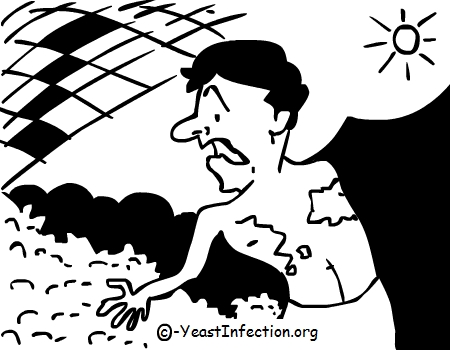
Tinea VersicolorA condition which is often confused with vitiligo or other common conditions which affect the pigmentation of the skin but which is actually caused by a yeast infection is, Tinea Versicolor. This is also often referred to as Pityriasis versicolor, Dermatomycosis furfuracea or Tinea flava.

The reason for Tinea versicolor often being mistaken for vitiligo is because although the condition may start out as a group of small spots on the skin which are lighter than the surrounding area, if left untreated they eventually join up to make a discolored lesion. However Tinea versicolor can also appear as red spots rather than simply white and this can often help in achieving a diagnosis.

Unlike vitiligo the lesions or spots associated with tinea versicolor can appear quite scaly in nature but this is usually at the margins which often assists with providing a definitive diagnosis.

Related articles:

Causes of Tinea Versicolor

Yet for all it has similarities to vitiligo, tinea versicolor, which can often be accompanied by slight itching, is actually caused by a yeast which lives on the skin and is therefore treatable. The yeast usually responsible for the problem is one known as Malessezia Furfur and although it is found on the skin in the majority of adults under certain conditions it will, like Candida albicans, multiply and start to cause problems.

No one really understands why tinea versicolor multiplies and causes skin damage, however the conditions which will induce this problem are quite well recognized. These include:

  • A warm and humid weather environment
  • Oily skin
  • Being in your teens or early twenties
  • Excessive sweating (which, if it is not triggered by heat or physical exertion can be an indicator of autonomic nervous system dysfunction)

Diagnosing Tinea Versicolor

As I have already suggested, although tinea versicolor can often be initially mistaken for vitiligo there are ways to tell the difference. I have already mentioned the scaly nature of tinea versicolor which, although doesn’t always appear, it most often does. However here are some other ways in which they differ:

Vitiligo often presents on symmetrical sides of the body whereas tinea versicolor most usually does not.

Tinea versicolor usually appears on parts of the body distinct from the areas where vitiligo is normally found. For example, vitiligo manifests more commonly around the armpits, eyes, fingers, groin, mouth and wrists, whereas tinea versicolor is usually found on the back, chest, stomach and upper-arms.

Quite often tinea versicolor is itchy, although not distressingly so, whereas vitiligo infrequently produces skin irritation.

Treating Tinea Versicolor

Once you have achieved a diagnosis of tinea versicolor, which I recommend doing via a qualified professional, then there are two avenues of treatment. Many people commence treating it with conventional medications and those are usually in the form of antifungals. Ketoconazole is most popularly used with selenium sulphide being the primary ingredient in shampoos.

Conventional Treatments

Antifungal shampoos are often prescribed if the yeast overgrowth is on the scalp. This is applied and left on for a short duration, usually 5-10 minutes, before being rinsed off again. Often this has to be done every day for around a week to ensure the infection is fully treated. A downside to these products is that they don’t have the most pleasant of perfumes and some people find this quite difficult to deal with.

Antifungal creams are the treatment of choice when it comes to clear areas of skin which are affected. These are applied once or twice a day usually for a minimum of two weeks.

Antifungal tablets are usually only used if the areas affected are large and diverse or the patient has recurring tinea versicolor. Sometimes the tablets are used in conjunction with the cream or shampoos in such cases.

Unfortunately, like other yeast infections, tinea versicolor is prone to returning and particularly if you experience the conditions which triggered it the first time round. Often patients are advised, even after the main course of treatment, to apply creams or use shampoo on a very much reduced or regular scale for some time into the future to prevent recurrent problems.

The good news is that although it might take several weeks or months, the normal pigmentation of the skin does return.

Natural Treatments

The other avenue of treatment is to look at natural remedies. This is my preferred avenue because there are no, or few, reactions and also it is more likely to resolve the condition permanently.

Firstly you have to rid your skin of the yeast and I recommend doing this by applying Tea Tree Oil. Although there are a vast number of these oils on the market today the one I find to be the most successful is the Australian Tea Tree Oil (Melaleuca alternifolia). Apply one drop to an affected area and gently massage it in. The results from this oil are likely to be as spectacular as any you will see from conventional medications. It may well work with other kinds of Tea Tree Oil but it could also take longer.

Another natural treatment you can try is Oregano Oil, however this product does seem to be more aggressive and I would suggest that you only use it, and very sparingly, if progress with the Tea Tree Oil is particularly slow or you have long standing damage.

Related articles:

Relieving Discomfort

When you are looking to relieve the discomfort which can be caused by tinea versicolor I would recommend one of the many natural oils or treatments which are noted for soothing inflamed or damaged skin. These include Aloe vera (which is also a natural anti-inflammatory), Jojoba, natural organic beeswax, emu oil, goanna oil, or herbal calendula. When you purchase these products try to look for brands which are cold pressed and with no additives to ensure you are getting the best quality product available and also one which will not irritate the skin further. Often the better quality products have only a slight perfume which evaporates very quickly after use.
These products are very good for moisturizing the skin while you are using Tea Tree to heal the damage.

Using natural products means it takes a little longer than conventional medicines to produce a result because they are less aggressive. Normally you are looking at several months before seeing your skin return to normal. However you are much less likely to experience recurring infection even if you are exposed to the situation which triggered the problem the first time round.